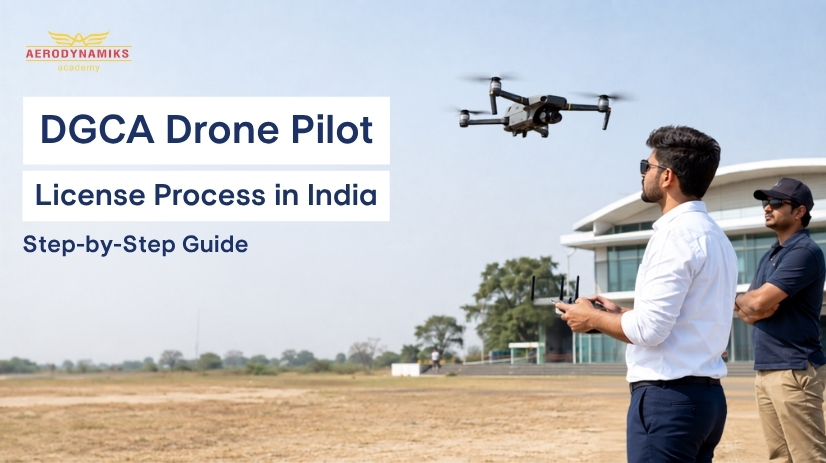
To get a DGCA drone pilot license in India, you need to enroll with a DGCA-approved Remote Pilot Training Organisation (RPTO), complete ground and practical training, clear the DGCA’s online exam, and then receive your Remote Pilot Certificate (RPC) through the official portal. The entire process usually takes about a week of training, followed by certificate issuance.
Drones have moved well beyond hobby flying in India — they’re now used commercially for agriculture, surveying, mapping, inspection, and delivery. But flying one legally for anything beyond very light recreational use requires a government-recognized license, and skipping this step can mean fines or confiscation under the Drone Rules, 2021.
What Is a Remote Pilot Certificate (RPC)?
A Remote Pilot Certificate is the official license issued to individuals who want to operate drones (other than the lightest “Nano” category) in Indian airspace. It’s issued after completing training at a DGCA-authorised training organisation and passing the required examination — similar in spirit to how a pilot’s license works for manned aircraft, just scaled to drone operations.
Who Needs a Drone Pilot License in India?
You’ll need an RPC if you plan to fly:
- Micro category drones for any purpose other than personal recreational use
- Small, Medium, or Large category drones, regardless of purpose
- Drones for commercial work — surveying, agriculture, photography-for-hire, inspection, or delivery
Nano category drones (under 250 grams) flown purely for personal recreation are generally exempt from the licensing requirement, though registration rules still apply.
Eligibility Criteria for a DGCA Drone Pilot License
- Minimum age of 18 years
- Minimum educational qualification of 10th pass
- Medical fitness — no specific medical certificate is usually required for smaller drone categories, but training organisations will confirm current requirements
- Successful completion of ground and practical training at an approved RPTO
Step-by-Step Process to Get Your DGCA Drone Pilot License
1. Enroll with a DGCA-Approved Remote Pilot Training Organisation (RPTO)
You can only get a valid RPC by training through an organisation officially authorised by the DGCA — training from an unauthorised source won’t result in a recognized certificate.
2. Complete Ground and Practical Training
Ground training covers drone regulations, airspace classification, safety procedures, and basic meteorology. Practical training gives you hands-on flying experience under supervision, covering takeoff, landing, and emergency procedures.
3. Clear the DGCA-Prescribed Examination
After training, candidates need to clear a theory and/or practical assessment conducted as part of the RPTO’s certification process, in line with DGCA norms.
4. Get Your Remote Pilot Certificate Issued
Once you clear the assessment, your RPC is generated and linked to your profile on the government’s aviation portal, making you a certified drone pilot recognized across India.
Documents Required
- Proof of age and identity (Aadhaar, PAN, or passport)
- Proof of educational qualification (10th pass certificate)
- Passport-size photographs
- Any additional documents specified by your chosen RPTO at the time of enrollment
How Long Does Drone Pilot Training Take?
Most DGCA-approved drone pilot training programs run for about 6 days, combining classroom sessions with supervised flying practice, followed by the certification process. This makes it one of the fastest aviation-adjacent qualifications you can earn.
Career Opportunities After Getting a Drone Pilot License
A drone pilot license opens doors in agriculture (crop monitoring and spraying), real estate and construction (aerial surveys), infrastructure inspection, film and media production, e-commerce logistics, and disaster management support — sectors where commercial drone use is expanding quickly in India.
Aerodynamiks Academy’s Drone Pilot Training course is designed to take you through this entire process with DGCA-approved instructors, so you walk away certified and ready to work.
FAQs
Is a drone pilot license mandatory in India?
Yes, for most drone categories other than very light Nano drones used purely for personal recreation. Commercial or professional use of any drone requires a valid Remote Pilot Certificate.
How long is a DGCA Remote Pilot Certificate valid?
RPCs are typically valid for several years and require renewal — always check current validity periods on the official DGCA portal, since drone regulations are updated periodically.
Can I get a drone pilot license without prior flying experience?
Yes. Drone pilot training programs are designed for beginners and don’t require any prior aviation background — the training itself covers everything from basics to practical flying.
What is the difference between drone registration and a drone pilot license?
Drone registration (getting a Unique Identification Number) applies to the drone itself, while the Remote Pilot Certificate is the license that qualifies the person flying it — both are usually required together for legal commercial or non-recreational operation.