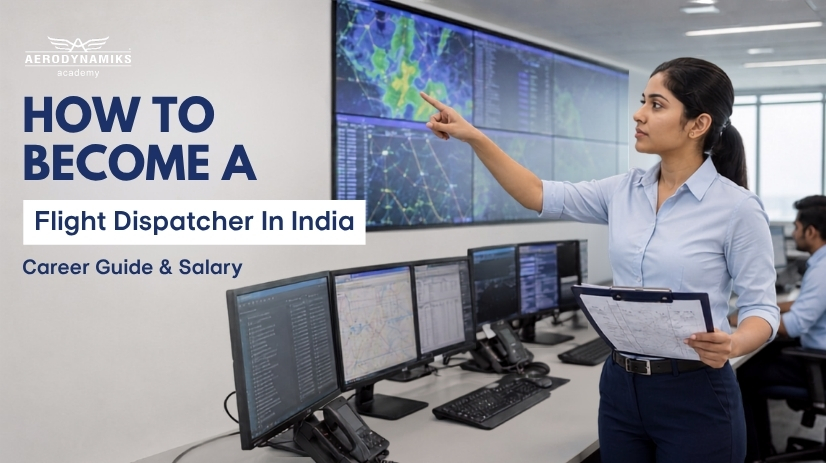
To become a flight dispatcher in India, you need to complete 12th with Physics and Mathematics, enroll in a specialized aviation program such as a BSc (Hons) in Civil Aviation Flight Dispatcher (CAFD), gain practical training in flight planning and operations, and meet DGCA-recognized licensing requirements for flight dispatch roles.
While pilots get most of the attention in aviation careers, flight dispatchers are the professionals working behind the scenes — planning routes, monitoring weather, and making sure every flight is cleared to fly safely. It’s a career that combines technical knowledge with real operational responsibility, without requiring years in the cockpit.
Who Is a Flight Dispatcher?
A flight dispatcher (also called a Flight Operations Officer) shares joint responsibility with the pilot-in-command for the safe planning and execution of a flight. They calculate fuel requirements, monitor weather along the route, prepare flight plans, and stay in contact with the crew throughout the flight to relay critical operational information.
What Does a Flight Dispatcher Do?
Day-to-day responsibilities typically include:
- Preparing and filing flight plans based on weather, route, and aircraft performance
- Calculating fuel loads and monitoring weight and balance
- Tracking flights in real time and coordinating with air traffic control and airline operations centers
- Advising pilots on route changes due to weather or airspace restrictions
- Ensuring compliance with aviation safety regulations for every flight
Eligibility to Become a Flight Dispatcher in India
- 10+2 with Physics and Mathematics (or equivalent qualifying exams for other streams)
- Enrollment in a recognized aviation program specializing in flight dispatch, such as a BSc (Hons) CAFD
- Strong analytical skills, since the role involves constant calculation and decision-making under time pressure
- Good communication skills for coordinating with pilots, ATC, and operations teams
How to Become a Flight Dispatcher in India (Step-by-Step)
1. Complete 12th With Physics and Mathematics
This is the standard entry requirement for most flight dispatcher and aviation degree programs, since the coursework involves navigation, meteorology, and aircraft performance calculations.
2. Enroll in a BSc CAFD or Equivalent Aviation Program
A structured degree program builds your foundation in aviation weather, air law, jet aircraft performance, human factors, and flight dispatch functions — all core knowledge areas for the role.
3. Gain Practical Training and Internship Exposure
Classroom knowledge alone isn’t enough — hands-on exposure to real flight planning software, operations centers, and airline processes is what makes candidates job-ready.
4. Meet Licensing and Certification Requirements
Depending on the airline or operator, flight dispatchers may need to meet specific certification requirements recognized under Indian civil aviation regulations before being cleared to work independently.
Skills Required to Succeed as a Flight Dispatcher
- Strong grasp of aviation meteorology and navigation
- Quick, calm decision-making under time pressure
- Attention to detail — small calculation errors can have serious safety implications
- Clear communication with pilots and air traffic control
- Comfort working with operational software and real-time data
Flight Dispatcher Salary in India
Entry-level flight dispatchers in India typically start in the range of ₹25,000–₹40,000 per month, with salaries increasing significantly with experience, airline, and additional certifications — senior flight dispatchers and operations controllers at major airlines can earn considerably more over time.
Why Choose BSc CAFD Over Other Routes
A degree-focused program gives you both the technical depth and the recognized qualification airlines look for, rather than piecing together flight dispatch knowledge informally. Aerodynamiks Academy’s BSc (Hons) Civil Aviation Flight Dispatcher (CAFD), run in partnership with Nitte Deemed to be University, is structured specifically around this career path — from foundational subjects in your first year to airline-ready operational training by your final year.
FAQs
Is flight dispatcher a good career in India?
Yes — it’s a growing field as India’s domestic and international air traffic expands, offering a stable aviation career without requiring pilot training or extensive flying hours.
Do flight dispatchers need a pilot’s license?
No. Flight dispatchers don’t need a pilot’s license, but they do need specialized training in flight planning, meteorology, and aviation regulations.
Can commerce students become flight dispatchers?
Most flight dispatcher programs prefer or require a Physics and Mathematics background from 12th, though some institutes allow students from other streams to qualify through additional bridge exams — always confirm with the specific program you’re applying to.
What is the difference between a flight dispatcher and an air traffic controller?
A flight dispatcher plans and monitors a specific flight in coordination with the airline and pilot, while an air traffic controller manages aircraft movement and separation within controlled airspace — they’re distinct roles working with different authorities, including coordination overseen by the Directorate General of Civil Aviation.